

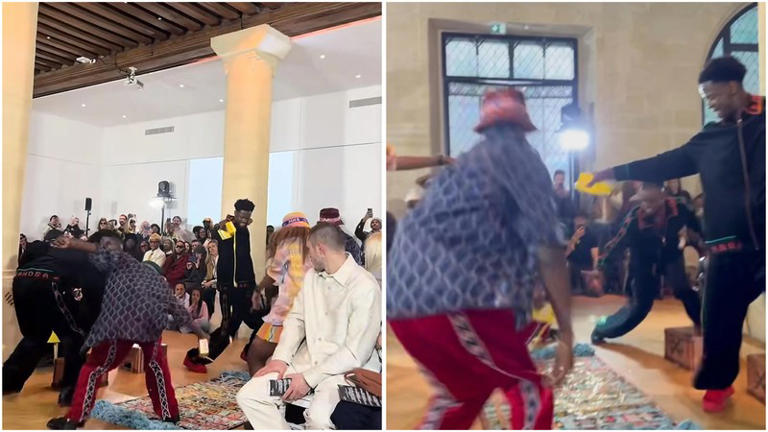
The recent performance by Robot Boii at Paris Fashion Week has sparked a heated debate across South Africa and beyond. During the Maxhosa Africa Fall/Winter 2026 show on March 7, the performer dramatically spilled custard on the runway, claiming the act was inspired by skhothane culture.
Skhothane, a flamboyant township subculture that emerged in Johannesburg in the early 2000s, is known for extravagant displays of wealth and waste. Participants often destroy expensive clothing or consume luxury items in exaggerated ways to showcase status.
By bringing this expression to an international stage, Robot Boii aimed to represent an unfiltered slice of township creativity.
However, the performance quickly divided public opinion. Critics argued that the act was embarrassing and inappropriate for a prestigious global platform like Paris Fashion Week.
Many felt that spilling custard in the name of township culture risked reinforcing negative stereotypes about South Africans.
Some commentators said it undermined the sophistication and craftsmanship associated with African fashion brands striving for global recognition.
They believed the moment overshadowed the work of designers who seek to present African fashion as elegant, refined, and forward-thinking.Supporters, on the other hand, defended Robot Boii’s performance as an authentic cultural statement.
They argued that township culture has long been misunderstood and dismissed by elites who prefer more polished representations of African identity.
For them, skhothane represents creativity, rebellion, and the realities of street culture that deserve visibility.
The controversy highlights a deeper cultural tension in South Africa between curated global images and raw local expression.
Ultimately, the debate shows how art and fashion can become powerful platforms for conversations about identity, class, and cultural authenticity.
Sub-Editor :Matlala Kgaugelo